
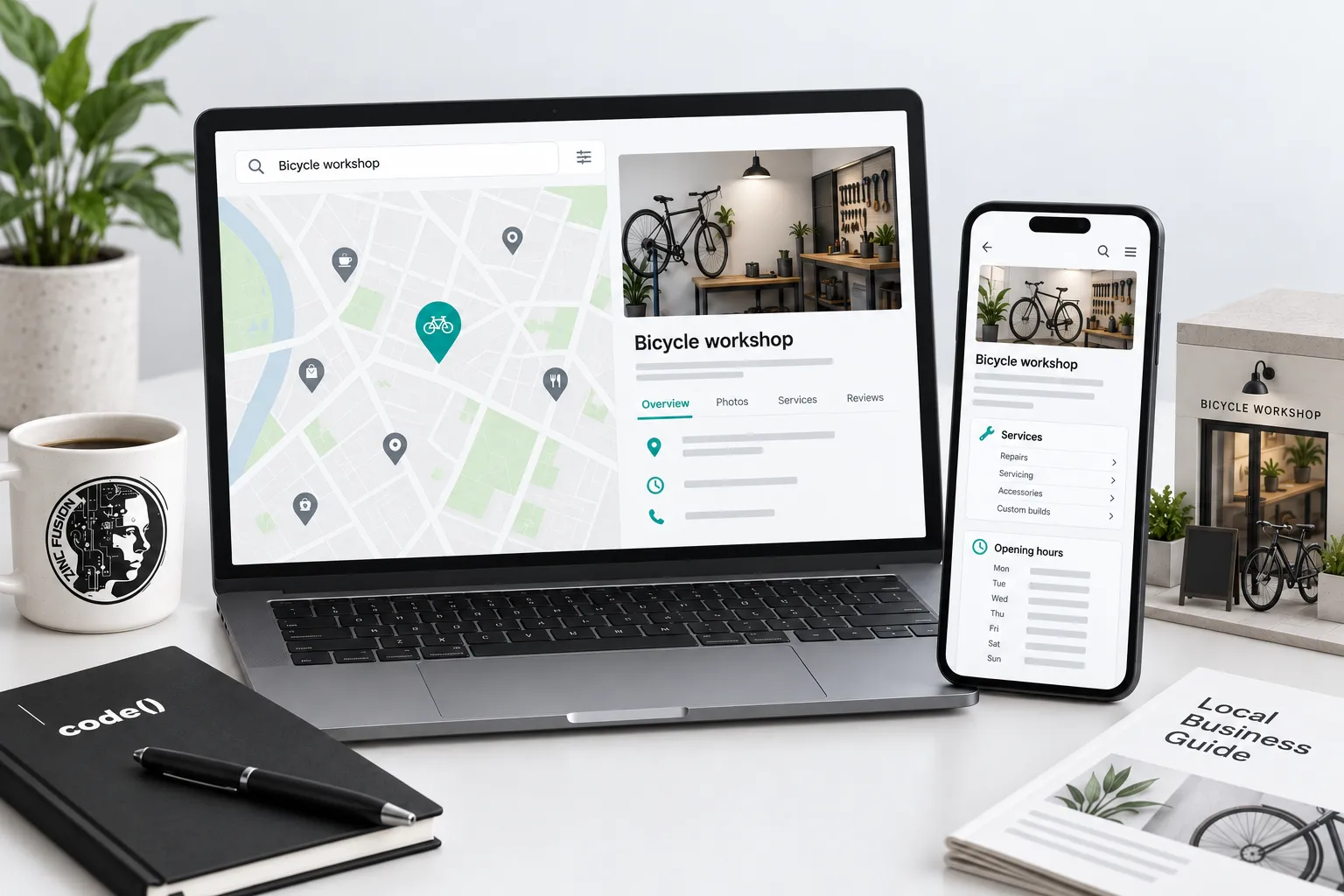
Represent the business as it actually operates: accurate profiles, eligible locations, useful local pages and genuine customer evidence. Track profile interactions separately from qualified inquiries. Relevance and prominence can improve, but proximity still affects local results.
Local search starts with a real business operating in a real place. A city name added to every heading cannot make an address eligible, shorten the distance to a searcher or establish a reputation.
Before editing listings, gather the authoritative business name, customer-facing phone, website, operating arrangements and any actual visitor hours. Resolve disagreements between records instead of copying whichever directory appears first.
Understand what local visibility depends on
Google describes local results in terms of relevance, distance and prominence. Complete information helps Google understand the business; location and recognition also matter. No agency can buy a better organic local position from Google.
Record the query, date, device and location context when checking results. A normal web search is not a controlled local rank grid. “Miami” in a query does not prove the searcher is physically in Miami.
Establish profile eligibility before editing an address
Follow Google's business representation rules. Storefront, service-area and hybrid businesses have different practical requirements. A mailing address or virtual office is not automatically an eligible customer-facing location.
If customers are not served at an address, review the applicable service-area rules. Do not invent opening hours or staff presence to make a listing look complete. Where access or facts are unresolved, prepare a correction record and leave the external edit pending.
Build a page that answers local buying questions
A useful city page explains services available, how an engagement works, relevant evidence and how to inquire. Give it genuine local substance. Do not generate dozens of nearly identical city-and-service combinations.
For a business based in Panama City and serving Miami, describe that arrangement directly. Relevant Miami work can support the relationship without claiming a permanently staffed Miami reception desk. ZINC's Panama City and Miami pages distinguish operating base from service coverage.
Reconcile the website and profiles
Compare business name, address where applicable, phone, website, category, hours and profile links. Record each discrepancy with its source and a verified replacement. Structured data should reflect the same established facts; it does not validate an uncertain address.
Keep an old URL's redirect working when a landing page changes. Check the profile destination on a phone and test the inquiry route. Use separate locations only when actual operations justify them.
Ask actual customers for honest reviews
Use a consistent invitation after a suitable completed interaction: “If you would like to share your experience, you can leave an honest review here.” Provide the correct profile link and make the request optional.
Do not offer incentives, write the review for the customer or send only satisfied customers to the public review page. Google's prohibited content policy addresses fake engagement. Resolve customer problems through normal service, independently of whether a review is changed.
Resolve one discrepancy without guessing
Suppose a directory shows an old telephone number while the website shows a newer one. Do not assume the website wins because it looks more current. Ask the business owner to confirm the public number and test that it reaches the intended team. Save that confirmation in the listing review sheet, identify who controls the directory account and prepare the exact correction.
After an authorised edit, reopen the public listing and record what is actually displayed. A submitted change is not a saved public correction. Address, visitor hours and service-area eligibility need their own confirmation; a mailing address does not establish a staffed customer-facing office. Keep an unresolved field visible in the working sheet instead of inventing it.
Give each fact its own check
| Field | Evidence to obtain | Completion check |
|---|---|---|
| Phone | Owner-confirmed public number and a test call | Correct number displayed publicly and reaching the intended team |
| Address and business type | Actual operating arrangements checked against Google's rules | Eligible configuration; no invented customer visits |
| Visitor hours | Confirmed times when customers can actually be served | Public hours match those arrangements |
| Service scope | Current offer confirmed by the responsible team | Website and authorised listing descriptions agree |
| Profile destination | Intended public landing page | Correct page and working inquiry path on a phone |
The local SEO service can coordinate those corrections. Bring the confirmed facts and account owner; a tidy-looking listing cannot settle an unanswered eligibility question.
Worked monthly review
Imagine a marine contractor serving several nearby communities. Its phone is correct on the website but outdated in one directory, a service page promises work the team no longer offers, and the inquiry form omits a project-location field.
Correct the verified phone, revise the service scope and add the location question if it helps qualification. Record which sources changed and verify their public readback. Then compare valid inquiries and service fit over time. Do not claim the directory correction caused every subsequent lead.
Use available profile performance, Search Console and inquiry records for their separate purposes. Track qualified opportunities as well as visibility. Use the local listing discrepancy sheet to retain confirmed values, account ownership and public readback.
Sources
- relevance, distance and prominencesupport.google.com
- business representation rulessupport.google.com
- prohibited content policysupport.google.com