
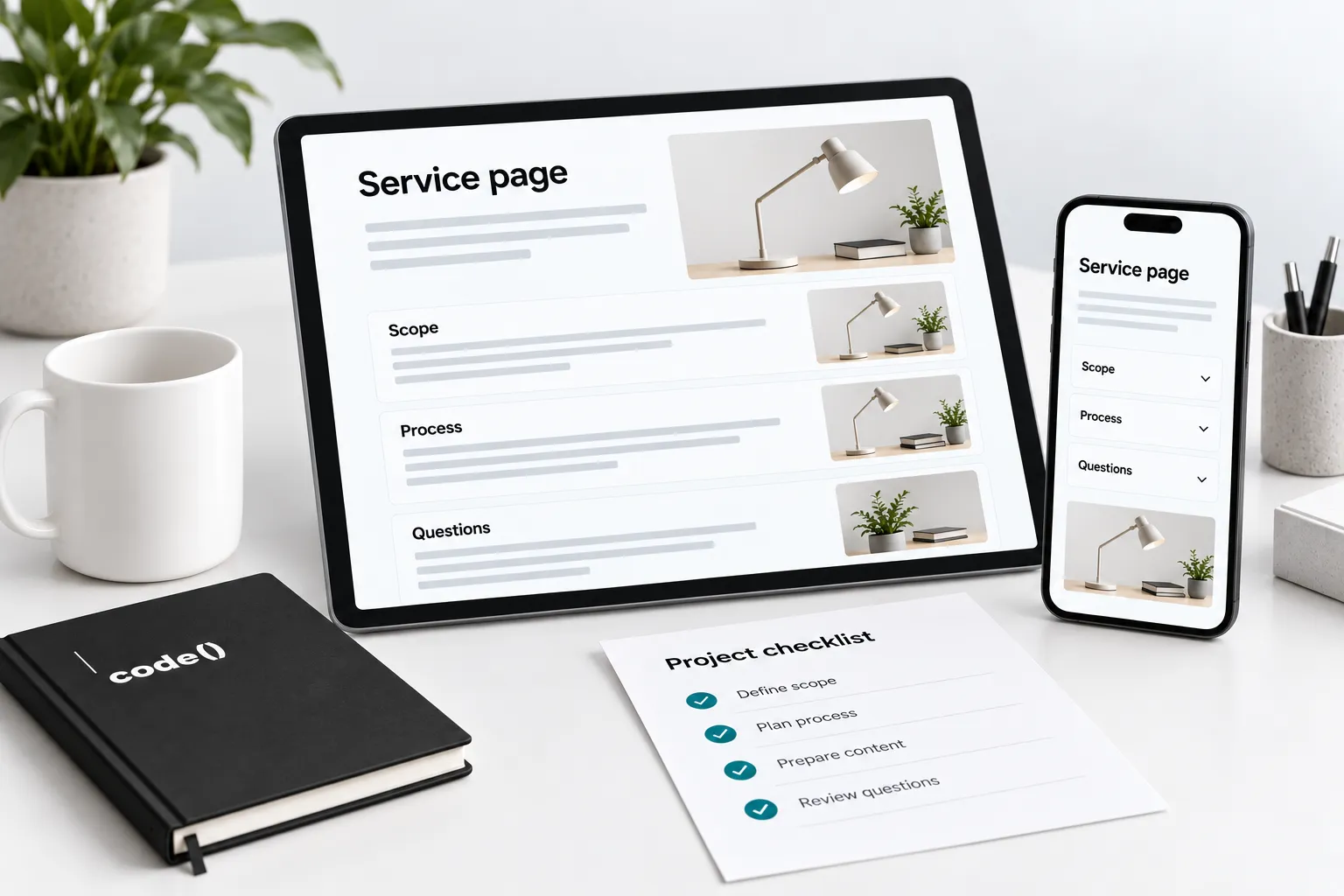
Explain who the service helps, what is included, what the client must supply and how an inquiry proceeds. Support claims with real evidence and answer buying questions. A reader should understand the offer without translating agency language.
A service page should explain fit: what the work includes, its boundaries and what happens next.
Use the four-pillar framework to connect that answer with search discovery.
1. State the offer clearly
Name the service and practical problem. Identify the relevant customer or situation when it matters.
Read the heading and opening together. Someone arriving directly should understand the service without visiting the homepage first.
2. Define scope and constraints
List the main activities or deliverables. Explain what needs assessment before timing or scope can be confirmed.
Verify service area, supported platforms, access requirements and customer responsibilities. Do not turn an estimate into a guaranteed result.
3. Describe the real process
Write the sequence from inquiry to handover. Name the information collected and decisions made.
Ask the person responsible for delivering the service to confirm the description. Web design connects the described process with the form and surrounding journey.
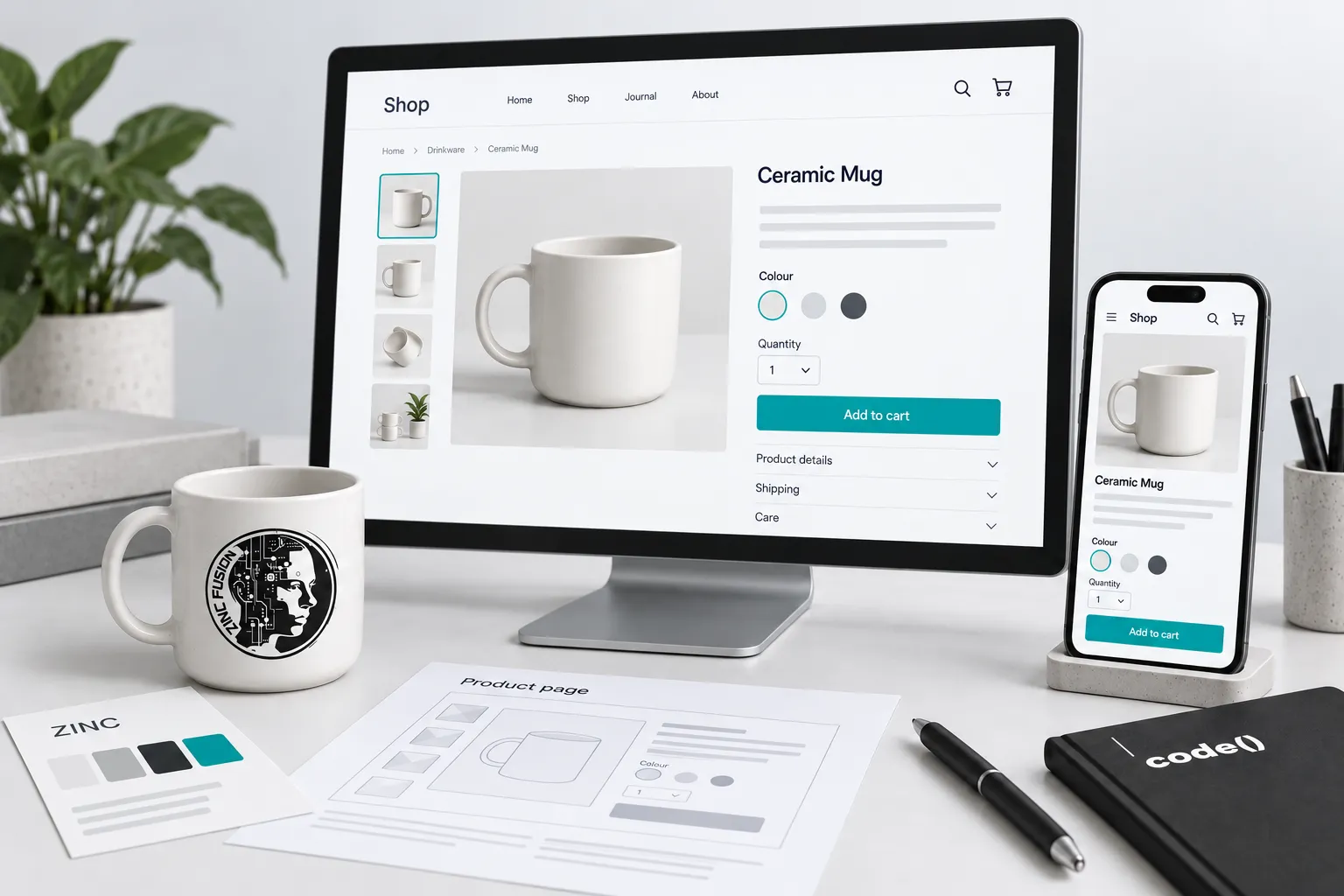
4. Support important claims
Use approved examples, photographs or verifiable qualifications where they help assess the offer. A workflow screenshot does not establish revenue improvement without supporting evidence.
Google's SEO starter guide recommends useful reliable content and clear organization. Keep private reports and unapproved testimonials out of public proof.
5. Answer fit questions and test the next step
Choose practical questions about preparation, ownership, maintenance or review. Verify answers with the business and place meaningful limitations near the relevant claim.
Check title, metadata and links. Google's title-link guidance explains that displayed search titles are influenced by multiple signals. Test the inquiry form and confirmation behavior on mobile and desktop.
Use this page review checklist
- The offer and intended situation are clear.
- Scope and constraints are approved.
- Process matches actual delivery.
- Evidence supports each specific claim.
- Practical questions have verified answers.
- Metadata and supporting links are accurate.
- An authorized inquiry reaches the receiving system.
Use our content brief guide to capture sources and reviewers. SEO work connects the page to relevant topics while preserving its service-selection purpose.
Plan supporting explanations through the content-hub guide: the service page explains the offer and links to its pillar and useful articles. Each article links directly to that pillar and service, with relevant supporting links.
The useful result is fewer important assumptions in the first conversation.
Write the missing buying details
For a hypothetical reporting engagement, replace “unlock insights” with specific scope: agree on one decision, identify approved data sources, define the measures, build the view and test it against source records. Explain what the customer must provide, such as account access and a person who can approve metric definitions.
A completed illustrative outline could read:
| Page section | Draft substance to confirm with the business |
|---|---|
| Offer | Reporting setup for a business whose teams use conflicting definitions |
| Included | One agreed decision, source map, metric definitions, reporting view and handover |
| Customer responsibilities | Provide authorised source access and a person who can approve the definitions |
| Boundaries | Additional integrations and historical cleanup require separate assessment |
| Process | Scope conversation; sample-record check; agreed build; review against the sample; handover |
| Proof | A permitted annotated example showing how a figure traces to its source; no invented savings |
| Enquiry | Ask about the decision, systems and current problem; explain who follows up |
Treat that as an example to verify, not ZINC's universal package or a promise for every supplier. For each of the seven review checks above, add the page section or evidence, pass/fix result and responsible person to the brief worksheet. Use the journey test sheet for the actual form delivery check.
State exclusions that affect the purchase, including unavailable integrations or separately scoped historical cleanup. Use only supported examples and results. Ask an unfamiliar reader to describe what they would receive and what happens after submitting the form. If they cannot, improve the offer explanation before adding another testimonial or decorative section.
Sources
- SEO starter guidedevelopers.google.com
- title-link guidancedevelopers.google.com