
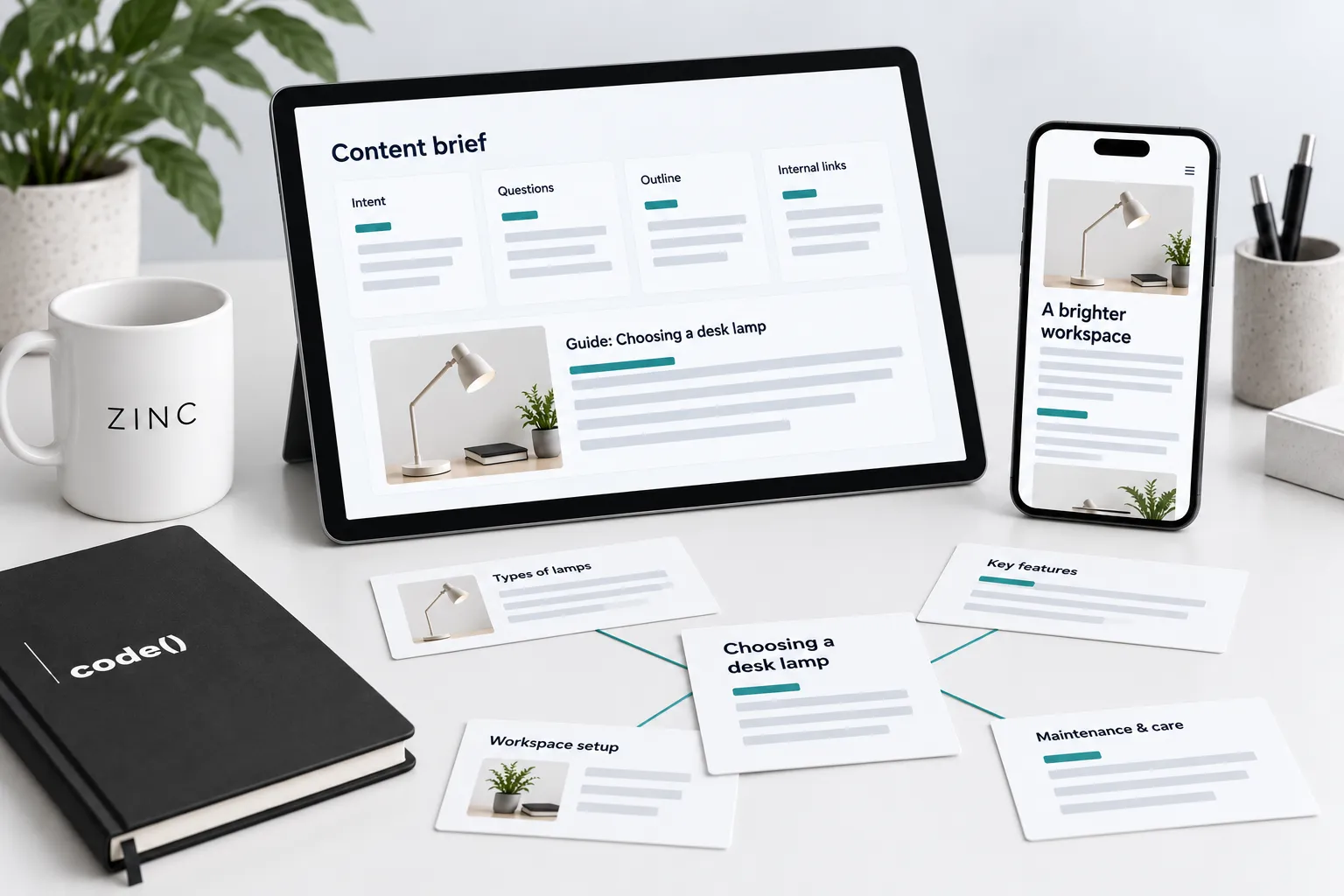
A useful brief tells the writer what the reader needs to decide, which evidence supports the answer and where to link next.
1. Name the reader and task
Describe the reader in one sentence. State the decision or task the article should support. “Desk lamps” is a topic; “choose lighting for a small desk without screen glare” is an assignment.
List what the reader already knows and what needs explanation. Place the assignment under a relevant hub, such as the four-pillar SEO guide.
2. Review queries and page formats
Search the relevant questions and record the formats you see: guides, comparisons, categories or troubleshooting pages. Date the observation. Use it to test the task you identified, rather than copying competitors' headings.
Google's SEO starter guide recommends considering the language different readers use. Combine closely related questions when one useful page can answer them.
3. Specify the evidence
For each substantive claim, name the source: verified specifications, approved expert input, a demonstration or official documentation. Mark missing information before drafting. Label hypothetical examples as examples; keep private client figures out of public copy.
Google's people-first content guidance emphasizes original value, clear sourcing and usefulness. It has no preferred word count. Include what completes the answer, then stop.
4. Outline the answer and links
Open with the answer or practical starting point. Give each section a clear job and identify its supporting evidence. Add exceptions where they change the decision.
Choose the main pillar, a useful supporting guide and a relevant next step. Specify the reason for each link. Google's link guidance calls for crawlable links and descriptive, relevant anchor text. Verify destinations rather than inserting the same link list everywhere.
5. Assign review and maintenance
Name the writer and factual reviewer. Before publishing, check the opening, claims, examples, title, description, images and links. Set a review trigger, such as a specification change or a new unanswered customer question.
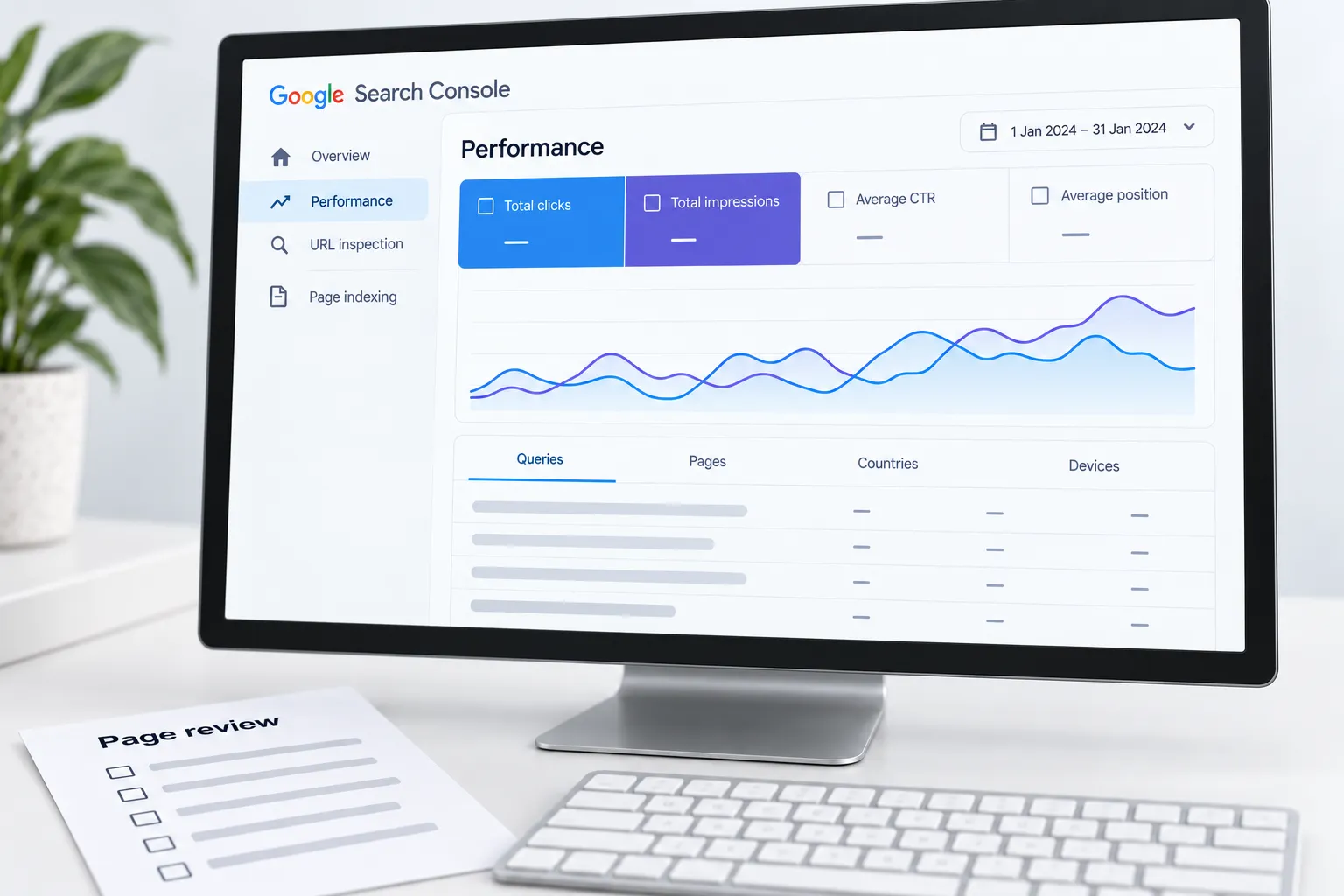
After publication, inspect relevant queries and page behavior against the original task. Use observations to improve missing explanations without turning one isolated query into a new strategy.
Brief template: reader; task; main question; verified sources; section jobs; pillar; supporting links; next step; writer; reviewer; update trigger.
Use the channel planning framework to give content a job alongside the other channels. Connect assignments through the content planning guide and SEO work. Clear sourcing also supports generative search optimization, without promising citations.
Sources
- SEO starter guidedevelopers.google.com
- people-first content guidancedevelopers.google.com
- link guidancedevelopers.google.com