
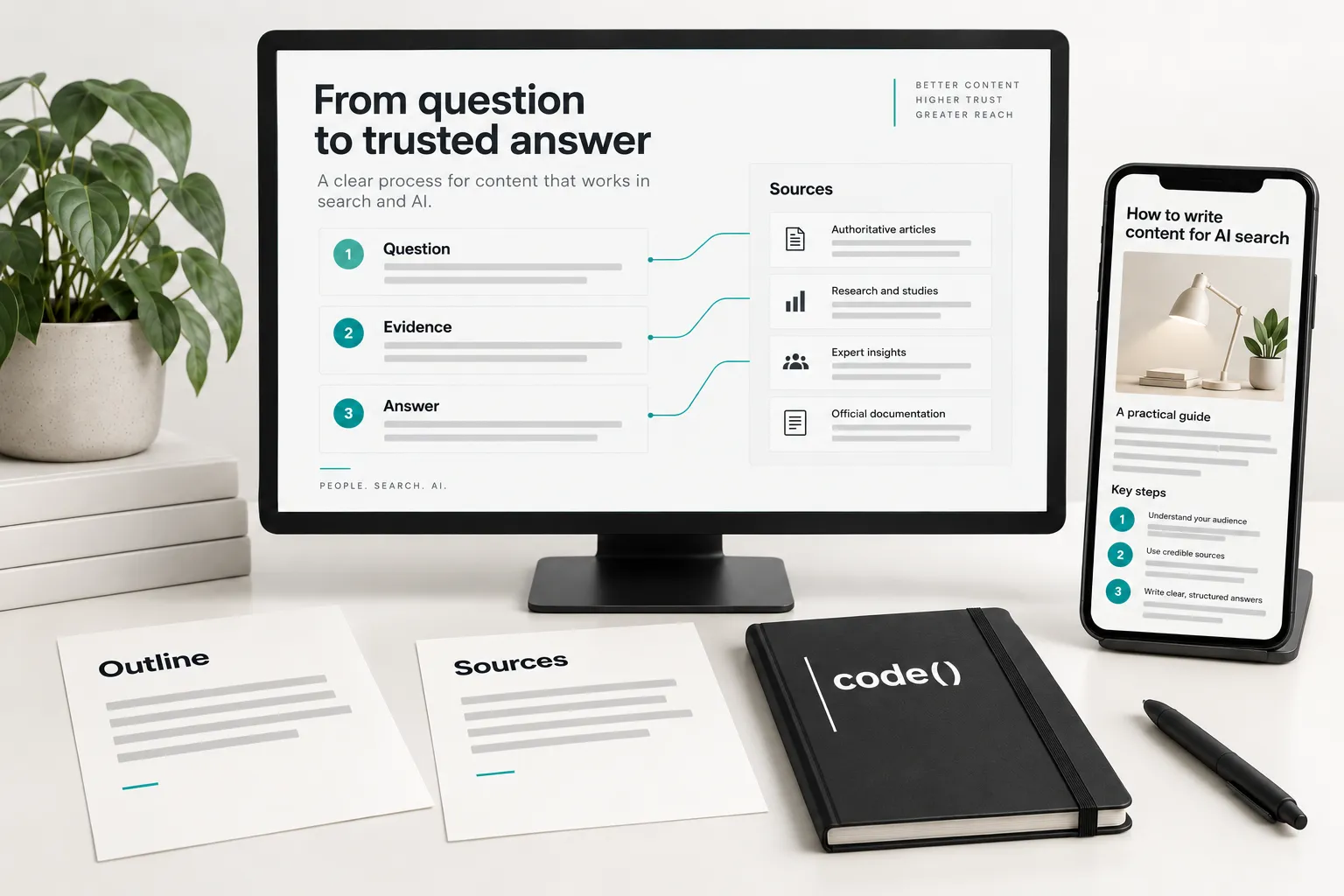
An AI citation is an observation. It is not a content strategy.
Google says its existing SEO practices apply to AI Overviews and AI Mode. There is no special markup required for those features. Start with the customer question and the evidence available to answer it.
1. Choose a decision worth answering
Collect questions from actual inquiries, search data and product or service reviews. Choose one decision: which option fits, what preparation is needed or how to solve a specific problem.
Write the reader, question and intended next step on one line. Our SEO pillar guide puts this work in the broader search plan. A list of fashionable prompts does not replace a useful page.
2. Assemble the facts first
Gather approved product details, methods, examples and primary references. Separate verified facts from estimates and missing information. Assign a person to check each claim.
If a model helps draft or compare ideas, give it the supplied sources and require it to flag unsupported statements. Check citations yourself. A confidently formatted footnote can still lead nowhere.

3. Publish an answer people can use
Answer the main question early. Add steps, comparisons or decision criteria where they help. Explain limitations and identify the author or reviewer with relevant experience.
Link to supporting pages with descriptive text. Keep specifications, prices and business details consistent with their source records. The content-brief workflow turns this into an editorial handoff.
4. Check eligibility and access
Inspect the page's crawl access, indexing status and visible content. Google requires a supporting page to be indexed and eligible for a Search snippet to appear in its AI features; meeting those conditions does not guarantee inclusion.
Use the canonical inspection workflow when Google has selected another URL. Repair the actual issue rather than adding an unsupported AI-specific file or tag.
5. Observe a repeatable sample
Record the exact question, system, date, location where relevant, displayed citations and answer accuracy. Repeat the same sample and document changes. Responses and linked sources can vary.
Review record: question; customer decision; source page; verified claims; indexing check; observed citation; date; next action.
Treat the sample as evidence for generative search work, alongside search traffic and business outcomes. It cannot prove universal visibility or predict a future algorithm. Publish useful answers. Verify what happened.
Sources
- existing SEO practices apply to AI Overviews and AI Modedevelopers.google.com